Episode Transcript
[00:00:02] Good morning.
[00:00:04] Well, we're not going to talk about authority at punk rock today, although it's tempting. But what we're going to talk about is water.
[00:00:20] And ironically, I forgot to bring a glass of water with me because I usually wet my whistle before preaching and today you got me dry.
[00:00:30] And it's kind of ironic also that I've been thinking about water for the last month.
[00:00:36] It started when I was preparing for the mini retreat that we did a couple weeks ago on a Saturday. And we read Robert Alter's translation of the book of Genesis and highly recommend it. It's a great translation. He's a Jewish scholar and the translation is amazing. It's poetic, it makes the story come alive without oversimplifying or dumbing it down by over interpreting it. And we had a lively discussion and I think that everybody had a lot of fun. And the reason I'm saying this is we're going to have another mini retreat coming up in December where we're going to explore incarnation, which I think is really appropriate for leading up to Christmas, because Christmas is all about incarnation. And let's also recognize that we are all incarnate beings. We live in these bodies imbued with spirit, breath, life and water.
[00:01:46] It's lost on me that since Thursday water has been very much on all of our minds. You know, the one element that we take most for granted?
[00:01:56] Well, it's a molecule. Chemistry, chemically, but spiritually, water is an element.
[00:02:02] The clear, cold, life giving element.
[00:02:06] Oh, thank you.
[00:02:11] Now you all are probably getting thirsty, right?
[00:02:18] Ah, so good.
[00:02:24] So water, the one element that we take most for granted, that we can rely on being instantly available as soon as we turn on that tap and it's delivered to our homes and our workplaces, our public spaces, our places of worship, water suddenly became suspect.
[00:02:46] Weird, right? I think we all know it was pretty weird getting that alert on Thursday night.
[00:02:53] We're supposed to boil it.
[00:02:56] Well, thankfully we have also got electricity and gas at the turn of a switch, so it was barely an inconvenience.
[00:03:07] Yet we panicked.
[00:03:10] I complained.
[00:03:12] I don't know if any of you did doubly weird and utterly human.
[00:03:19] When I read those opening lines from the book of Genesis, this book that gives us our beautiful mythopoetic story of the creation of the cosmos, the heavens and the earth, all the teeming life that inhabits this world, including us, we humans in all of the of our complexity and beauty.
[00:03:44] I was startled to learn that God didn't create everything that is out of nothing.
[00:03:55] Something was already There when God began to form the cosmos, it was the deep.
[00:04:03] The Hebrew words are nohu, navahu and alter translates these words as water and waste.
[00:04:11] Water, the primal element, primal meaning both first and most important.
[00:04:18] And waste, unformed, chaotic water, wild water, the deep, pure potentiality.
[00:04:31] The spirit hovered over the face of the deep well of wild water, and God began to speak creation into being.
[00:04:41] Water is right there at the very beginning of the beginning.
[00:04:47] I love this so much.
[00:04:50] You know, we've talked a lot here at St. John's about how our wild stories from scripture have become domesticated over time.
[00:05:01] Part of the reason for this is that we've heard these stories over and over again and we think we already know the message that's going to be delivered.
[00:05:12] Maybe we've heard them preached over and over again and heard the same dry message over and over.
[00:05:22] In an effort to bring us back into the wildness of what is actually written in the scriptures, we're trying to rewild them. You've heard us talk about this effort not to add anything to them or subtract anything from them, but to allow the stories to startle us into the grace and beauty and love and sometimes horror that these stories are meant to deliver.
[00:05:51] What I've been thinking about lately is that the stories and the poetry that are at the heart and the basis of our faith have not only become domesticated, they've been dehydrated.
[00:06:06] The water, the juice, has been extracted, just like the dehydrated food that you might carry in your pack to reduce the weight of what you're carrying.
[00:06:21] The stories have been dehydrated and have become bland, light and well preserved with a long shelf life, but so dry that sometimes they don't do us much good anymore until they are rehydrated.
[00:06:38] So rehydration could be the first step in an effort to rewild our stories, our faith, and our lives.
[00:06:48] So let's consider water.
[00:06:50] It's a miracle that we take for granted until it's either in short supply, becomes contaminated, or there's too much water. Let's face it, there can be too much of a good thing.
[00:07:05] Water covers about 70% of the Earth's surface, and roughly 3% of that water is what we refer to as fresh water.
[00:07:15] And the bulk of that fresh water, well, the vast majority is locked in glaciers and ice caps and some stored deep in the ground. So deep that we can't even drill down to it to access it.
[00:07:29] So deep we can't even drill down to it.
[00:07:32] So of the most abundant substance on Earth, water, only 7,000ths of, of 1% is available to sustain life.
[00:07:45] And yet here we are.
[00:07:48] All living things, all living beings on Earth that rely on water to live are sustained by what amounts in the big picture, to a few drops of water.
[00:08:02] And think about where water comes from.
[00:08:05] And I don't just mean the water that magically appears when you turn on your tap, but we should consider that, too.
[00:08:13] If you live in town, that water comes from wells northeast of town, and they pump water from deep in the ground out of the Snake river alluvial aquifer.
[00:08:25] And if you live out of town, you're still drilling down into the Snake river alluvial aquifer.
[00:08:33] But where did that water come from?
[00:08:36] A bunch of different places.
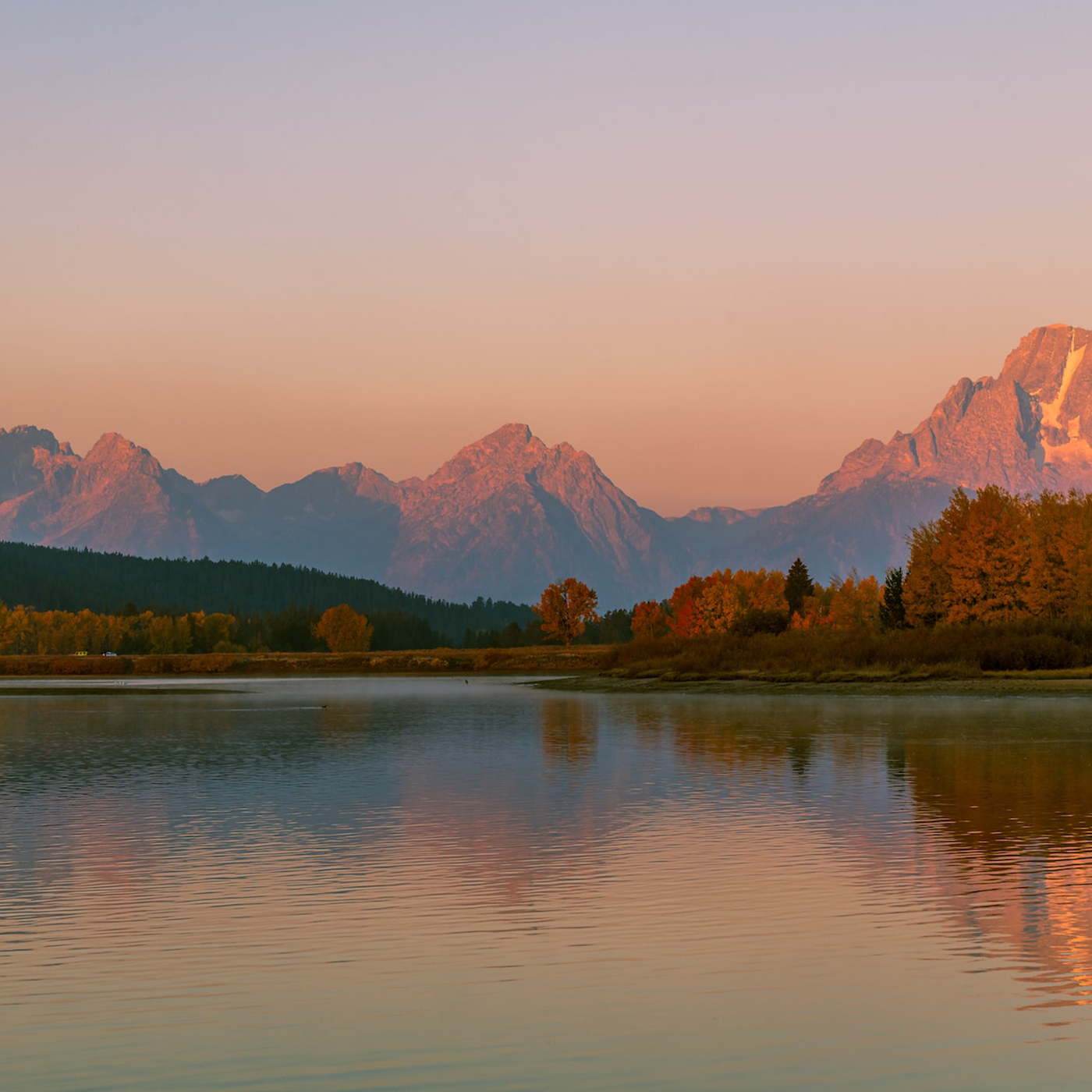
[00:08:38] Primarily, it comes from the snowpack that fills these mountains that surround us. Most years. We had kind of a dry winter last year. But it comes from the Tetons. It comes from the Gros vence, which, during spring runoff, this water percolates down through the gravelly floor of this valley until it reaches the aquifer.
[00:09:02] And it comes from stream flow leakage as the Snake and the Grovon Flat Creek and other tributaries seep lose some water through their gravelly beds.
[00:09:20] And it seeps down through the soil, finding its way into the deep of the aquifer hidden in the ground below us. It's almost as if it was waiting there for us.
[00:09:35] But where do these waters come from?
[00:09:37] They come from rain and snow falling from the sky. But where does that water come from?
[00:09:44] Evaporation from the face of the bodies of water on the surface of the earth.
[00:09:50] Ultimately, they come from below the face of the deep.
[00:09:56] It's an endless cycle of water replenishing itself.
[00:10:01] And I almost wanted to say that it's a perpetual motion machine, but it's not.
[00:10:08] It's the circulatory system of a living, breathing planet within a living, breathing cosmos.
[00:10:19] It's as much of a miracle as your own living, breathing body.
[00:10:27] Think of your own body.
[00:10:30] It's about 60% water.
[00:10:33] Why all this water everywhere? Well, water moves nutrients through your body.
[00:10:40] It's a building block for the cells and serves as an internal environment where all life happens.
[00:10:49] It's wet in there.
[00:10:51] It is the primary component of blood and lymph, carries oxygen, glucose, vitamins and minerals to the cells of your body and hauls away metabolic waste products.
[00:11:06] It manages your body's internal temperature by way of sweat.
[00:11:12] It lubricates joints and cushions vital organs.
[00:11:17] It is the solvent that drives all the chemical reactions in your body.
[00:11:23] I love that. We call oceans and lakes and ponds bodies of water.
[00:11:30] Yours is also a body of water.
[00:11:35] Water is so common that we take it for granted and so extraordinary that we can barely fathom it chemically and physically. Water is nothing short of miraculous.
[00:11:48] It's as if it was made for us and we for it.
[00:11:53] Water is a spiritual substance, and this has been recognized by every tradition, every religious tradition, and ours, our tradition, tradition is saturated.
[00:12:07] There's this beautiful story that we heard today from Exodus about water.
[00:12:13] The people had escaped from bondage in Egypt and found themselves in the wilderness in the desert last week. They were starving. If you remember, God provided them with food, manna and quail.
[00:12:28] Now they're dying of thirst.
[00:12:31] And God empowers Moses to cleave the rock, bringing forth water from the deep.
[00:12:39] Water, the universal solvent, cleanses the people who come to the River Jordan to receive the baptism of repentance from John.
[00:12:48] Then John goes on to baptize Jesus. And the sky is ripped open and the dove comes down and the words are heard.
[00:12:57] This is my son, my delight.
[00:13:00] Listen to him and remember all the significant things that happened at wells, those holes in the ground that tap into the waters from the depth of the earth.
[00:13:12] Rebecca waters, camels.
[00:13:15] And Jesus conversation at the well with the woman at the well, promising her that he has water that will quench her thirst for good.
[00:13:27] The wedding at Cana, where huge clay jars filled with sacramental water were turned to wine. Jesus first miracle.
[00:13:37] Jesus washes his friend's feet at the Last Supper with a bowl of water, a towel tied around his waist.
[00:13:50] I don't know if you've ever noticed, but when we do communion, when the deacon is setting the table, one of the things that he or she do is pour a little water in with the wine.
[00:14:05] Keep an eye out for that.
[00:14:09] When Jesus is hanging on the cross, one of the last things that he says in one of the gospels is, I thirst.
[00:14:19] And a spear is driven into Jesus side. And what comes out?
[00:14:27] Water.
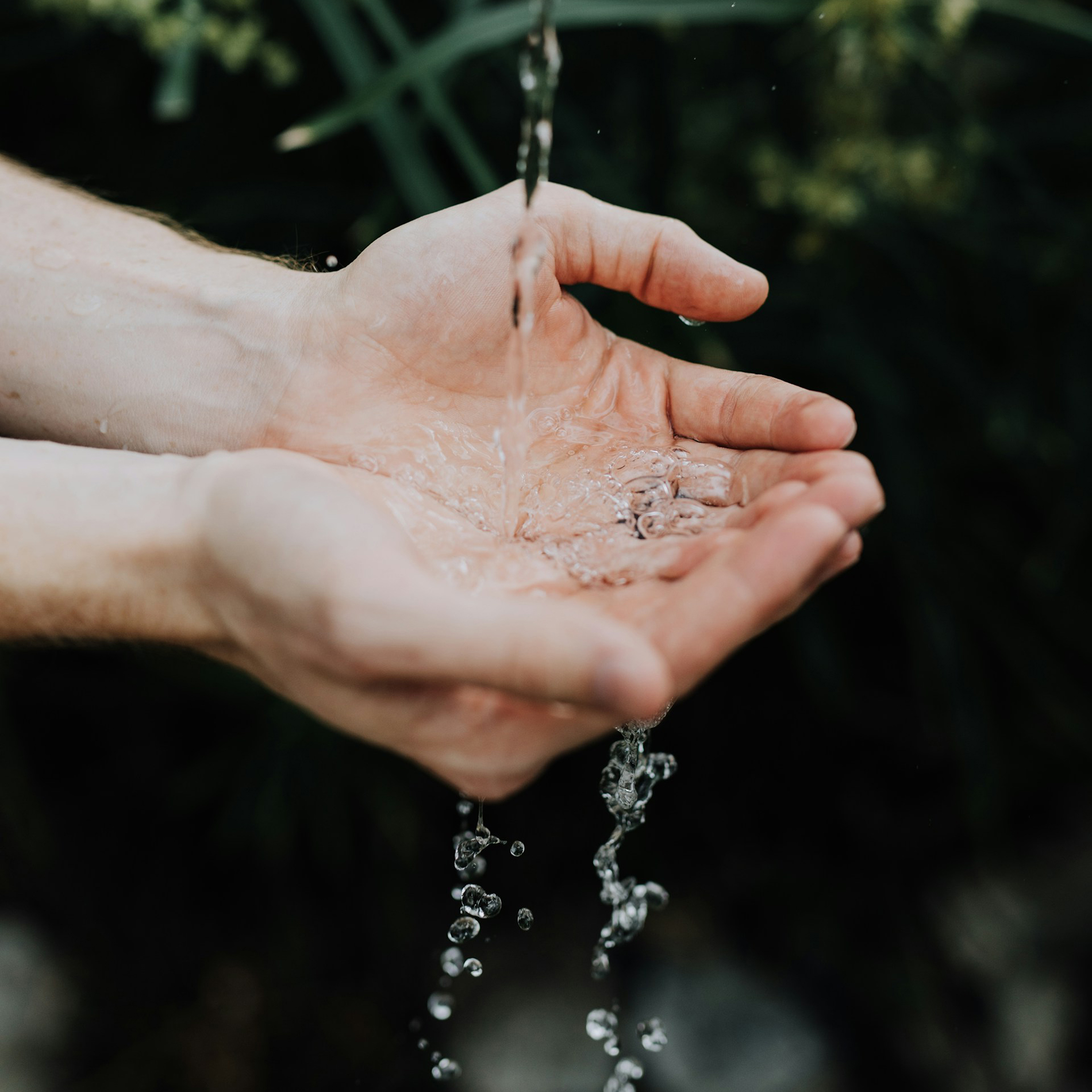
[00:14:29] And the list goes on and on. And I invite you to keep your ears and your hearts open for the sound of water in scripture, in the murmuring of the river, in your kitchen sink, savor the taste of a cold cup of water as it enters your mouth and feel it mixing with your blood.
[00:14:56] Feel the spirit rise from the deep and descend from the heavens.
[00:15:01] Next time you get caught out in the rain, put yourself out in the rain once in a while and get drenched.
[00:15:12] Because God is in every drop that falls and rises and falls and rises and cycles through this world.
[00:15:22] And you are a cosmos.
[00:15:25] You are a microcosm. A wet breathing, beautiful microcosm.
[00:15:33] A part of of this wet, breathing and beautiful creation which is God's good creation.
[00:15:43] Your life, my life, our lives together are as common as water.
[00:15:50] And that's good news, because that means that your life, my life, our lives together are as miraculous as water.
[00:16:02] Yes, we are formed from dust, and that's where we will return.
[00:16:07] But for now, we are alive, hydrated by the Holy Spirit.
[00:16:16] Anybody thirsty?
[00:16:19] So let's get wet.
[00:16:21] Amen.