Episode Transcript
[00:00:00] Speaker A: Please be seated.
I'm going to invite Cheryl Lund up
[00:00:09] Speaker B: here to join me in a conversation.
[00:00:14] Speaker A: This will be a little bit of a different Sunday sermon for us this morning.
Many of you in this room know that Cheryl is the executive director of
[00:00:26] Speaker B: 122, which is one of St. John's principal partners.
[00:00:33] Speaker A: Alongside that role as the executive of
[00:00:36] Speaker B: 122, Cheryl is also a member of
[00:00:40] Speaker A: St. John's Episcopal Church and
[00:00:43] Speaker B: a long
[00:00:44] Speaker A: tenured part of this congregation's history.
[00:00:49] Speaker B: Another role that Cheryl plays, whether she
[00:00:52] Speaker A: knows it or not, is one of my most trusted colleagues in the work of making a love spreading difference in this community and occasionally beyond.
[00:01:06] Speaker B: And she is also a friend.
[00:01:08] Speaker A: So Cheryl, thank you for being here and being a part of this conversation this morning.
[00:01:17] Speaker B: I'm going to start the conversation by preaching just a little bit.
[00:01:24] Speaker A: I don't know if that's because that's just what I know to do at
[00:01:28] Speaker B: this time on a Sunday morning or if it is my earnest desire for
[00:01:37] Speaker A: those of us who come to church,
[00:01:40] Speaker B: particularly for those of us who come to church in the west, the Western
[00:01:45] Speaker A: hemisphere, and particularly those of us who
[00:01:48] Speaker B: come to church in America, where our
[00:01:52] Speaker A: faith has been influenced by fundamentalists or literalist interpretations of this story.
And if I have an ax to grind with the church, the lowercase c church, it would be like God.
[00:02:07] Speaker B: We've like accidentally flattened these stories in
[00:02:10] Speaker A: such a way that we don't hear
[00:02:12] Speaker B: the power of these stories ability to
[00:02:15] Speaker A: speak in and through our lives to some degree, maybe 3,000 years after they were first written.
[00:02:25] Speaker B: So I'm going to start with this
[00:02:27] Speaker A: story that we have from the Hebrew
[00:02:29] Speaker B: Scriptures because that is the one that is more dynamic for me in the
[00:02:35] Speaker A: context of this conversation.
[00:02:38] Speaker B: And I'll give you a little background. Some of you know this story well, it comes from the Torah. We're following a central character in the Hebrew scriptures journey, this guy Jacob.
And where we meet Jacob in this particular section of the Hebrew Scriptures is he is on the run.
So prior to this particular scene, Jacob has manipulated his older brother.
[00:03:16] Speaker A: And remember, like barely older brother, like
[00:03:19] Speaker B: seconds older, Jacob is a twin. He comes out of the womb holding Esau's heel, his brother's heel, and that his name, Yaakov or Jacob means heel.
And as they grow up, they're like
[00:03:38] Speaker A: many siblings, they're quite different.
[00:03:42] Speaker B: And Esau comes in one day, exhausted from a day of hunting and providing for his family, famished.
[00:03:52] Speaker A: Jacob has been in the kitchen cooking
[00:03:54] Speaker B: up some kind of stew that's described as a red stew. And he's so hungry that he allows
[00:04:02] Speaker A: his younger brother Jacob to swindle him
[00:04:06] Speaker B: out of his birthright.
Like, it's an absurd and beautiful story.
And then the very next episode is Jacob, with the help of his mother, swindling his father in order to get his blessing.
So the fact that Jacob has manipulated his barely older brother and. And deceived his father with the help of his mother has put him on the run for his life.
And the story opens with this idea
[00:04:48] Speaker A: that he has left Beersheba and he
[00:04:50] Speaker B: is arriving in Haran.
Now, I want to point out three beats of this story, that for those of us Episcopalians, because we're so somber and so sober in the way that we worship, we miss these fantastic details. They are hidden in plain sight.
But because of the way that we
[00:05:16] Speaker A: read these stories over and over again
[00:05:19] Speaker B: and because of the relative, like, dignity
[00:05:22] Speaker A: that we try to.
[00:05:23] Speaker B: I mean, it would have been even
[00:05:24] Speaker A: better if we had had David with his Scottish accent in the King James
[00:05:29] Speaker B: version, read the Genesis story.
[00:05:31] Speaker A: Then you'd be like, oh, yeah, I get what you mean, Jimmy.
[00:05:34] Speaker B: Like, this is like, so he. He is.
[00:05:37] Speaker C: He.
[00:05:38] Speaker B: He lands in this place.
He's on the run.
He has done so. We should know. Like, he has done the worst thing that you can do. He has embodied life in the worst way that you can as a member of the.
[00:05:56] Speaker A: This emerging tribe of Israel.
[00:05:59] Speaker B: And he lands in this place. And there's some absurdity and some humor here.
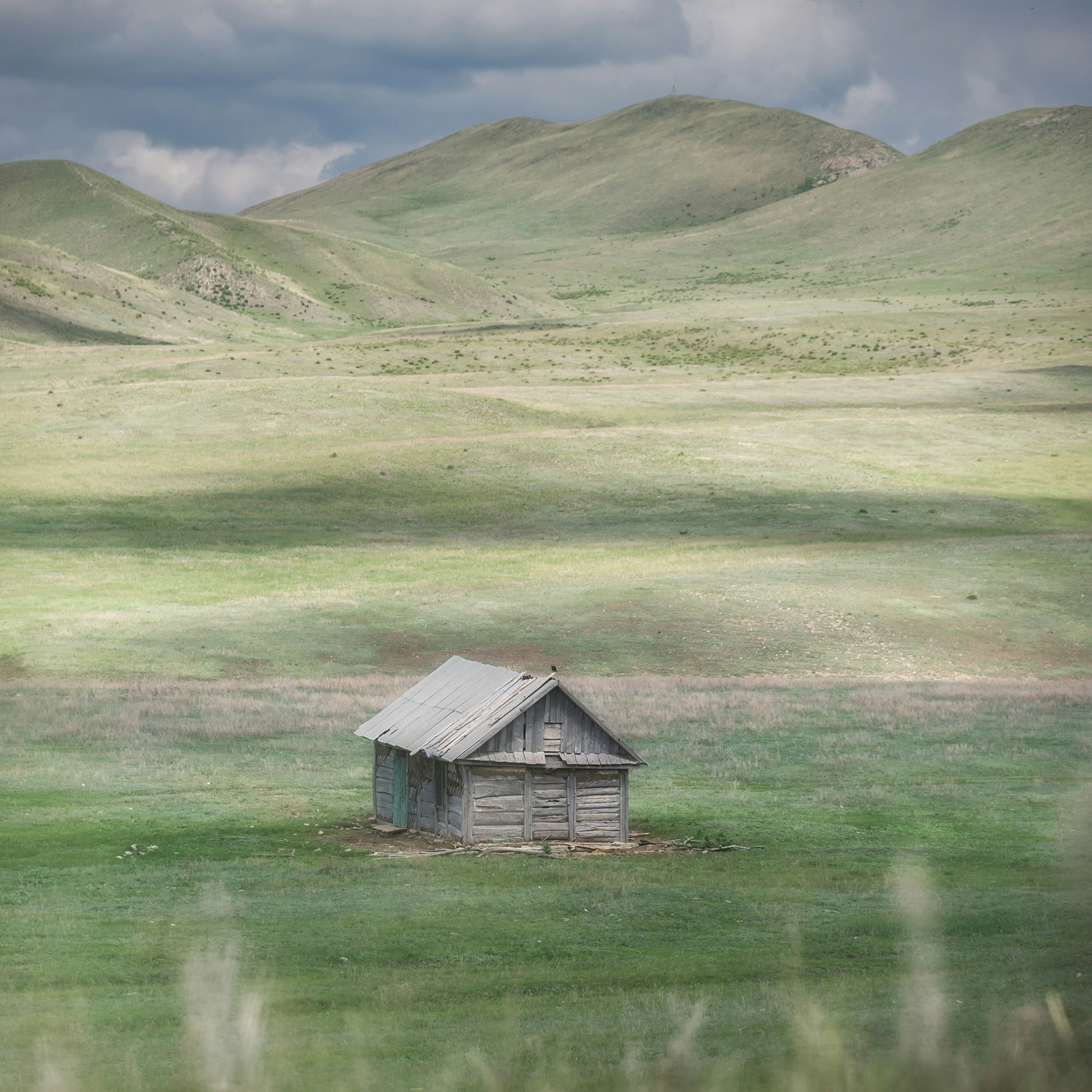
It says that he's exhausted. And he's so exhausted that he uses a rock for a pillow.
Like, what we are supposed to hear church is that Jacob is so in the middle of nowhere that they don't even have pillows, and he is forced to use a rock for a pillow.
He is on the run, a totally dastardly dude.
He finds himself in the middle of nowhere. He is not in Jerusalem. He is just outside Baggs, Wyoming,
[00:06:54] Speaker C: and
[00:06:54] Speaker B: he's using a rock for a pillow.
And then God comes to Jacob in a dream. And we know this story, this particular story is Jacob's ladder. Because Jacob has this vision of a ladder, or, to be clear, like, or of a staircase or of a ramp or of. Or probably more likely like a ziggurat, a temple that is built and ascends to the sky. This word that we have for ladder is only used one time in the entirety of the Hebrew scriptures, and it's right here in this place.
[00:07:36] Speaker A: So we're not really sure if it's
[00:07:38] Speaker B: an escalator or A freight elevator or a pyramid or what?
But in that moment that God comes
[00:07:49] Speaker A: to Jacob in this dream with this
[00:07:50] Speaker B: crazy fixture, Jacob sees angels both ascending and descending. And here's another detail that is hidden in plain sight.
No one in this time, no one, and maybe not some of you, in the context of hearing this story, would think that angels would be descending.
What people would. The beliefs that people would bring to this story would be that, like you, y', all, we, us, we are meant by our good behavior to ascend toward heaven.
But we have this guy who has behaved terribly and has found himself in the middle of nowhere where it is supposed to be a godforsaken place.
You know, this dastardly dude in a godforsaken place who has a vision of
[00:09:05] Speaker A: God coming down to where he is.
[00:09:11] Speaker B: Beautiful story.
[00:09:15] Speaker A: So, Cheryl, my dear, dear one, dear friend, you sit in an organization that serves human need in this community
[00:09:33] Speaker B: particularly,
[00:09:34] Speaker A: but not exclusively, because there's a lot of back and forth here, those who are vulnerable.
But you bring people like us who think we are invulnerable until you get cancer.
[00:09:53] Speaker B: Right.
[00:09:56] Speaker A: You bring people who think we are invulnerable into relationship with the vulnerable in order to provide for them. Like, what a beautiful piece of work.
Can you tell us a little bit about how you do it?
[00:10:13] Speaker C: Does this work?
[00:10:14] Speaker A: Yeah.
[00:10:15] Speaker C: You do this every week?
[00:10:17] Speaker A: Yes. And honestly, it takes some practice.
[00:10:20] Speaker C: Yeah, it does.
[00:10:21] Speaker B: Yeah.
[00:10:23] Speaker A: Madonna. We're both Madonna. Oh, I feel like I solved these microphones first with Madonna.
Not the, like the secular Madonna.
Not the religious Madonna.
[00:10:35] Speaker B: Yeah.
[00:10:36] Speaker A: So we can pretend that we're Madonna.
[00:10:39] Speaker C: We can really pretend.
So the question was, how do we do that?
[00:10:45] Speaker A: Yeah. What does that work look like?
[00:10:48] Speaker C: Well, 122 a lot. I mean, I see so many of you who know what it is and how it got there. We got here.
But our primary purpose is to get resources from people who have them to people who don't. And that can take the form of food or financial assistance or some kind of peer type counseling, but mentorship guidance.
[00:11:22] Speaker A: Yeah, and some education.
[00:11:24] Speaker C: Some education. Helping folks take a more active role in their financial lives.
[00:11:30] Speaker A: Yeah. And when we were talking this morning at 8, I may be incorrectly identified you and all of your cohort, your coworkers as those descending angels. But in our conversation, we decided maybe you're the latter.
Like bringing.
Bringing these.
Bringing the.
Some sacred help to those who need it. And sometimes like in really unexpected places.
[00:12:06] Speaker C: Yeah, I.
We have an amazing group of staff members and board and volunteers, and they are angels to Me.
[00:12:15] Speaker A: Yeah.
[00:12:16] Speaker C: But I see 122's role more as the latter. Or as I was thinking about the.
The chapel this morning up in the park, I was thinking about Manor's Ferry. And like, we're the ferry.
[00:12:31] Speaker A: Yeah.
[00:12:32] Speaker C: You know, we're the shuttle from one place to another. If you have resources on one side of the river and not on the other who are helping that happen and helping people understand what the complexities and the color and depth of their community really is.
[00:12:57] Speaker A: Yeah. And I love that image of Meiners Ferry in the sense of like, you can load resource onto that ferry or you can load people onto that ferry and they can find themselves on either side of the river. I mean, there's a beautiful give and take there where sometimes those of us who sit in these chairs that we sit in think like, for the most part, not everyone, but for the most part of, like, oh, we're supposed to carry these.
These resources to people who couldn't otherwise find them. When like, there's so much flowing backwards to us.
Like, Jacob doesn't call this place Bethel.
[00:13:40] Speaker B: Bethel is the way that we say
[00:13:41] Speaker A: it in English, Beit El, which means
[00:13:44] Speaker B: like house of God.
[00:13:46] Speaker A: Like, he doesn't call this House of God because.
Because there is a one way direction here. It's like he is identifying a co. Collaborative, co creative experience that's happening here. And I feel like 122 embodies that in such a beautiful way. And I also know that one aspect of your work and an aspect of our partnership in your work is the Jackson Cupboard. Can you say a little bit more about that?
[00:14:29] Speaker C: Yeah. Goes way back.
[00:14:31] Speaker A: Yeah.
[00:14:32] Speaker C: Way, way back. And I see David and Paul and other folks that know how far back it goes. But the Jackson Cupboard started here. It's a parishioner's Eagle Scout project and found its way into this space over here downstairs.
[00:14:54] Speaker A: Yeah.
[00:14:56] Speaker C: And then the other organizations that became 122 were also housed over there and downstairs. And so there was just this constant referral back and forth.
And then when the pandemic happened, the Cupboard joined our organization. And so now we're a merger of four.
And we went up there and had a really nice space for about a year, nine months to a year, and then it flooded.
[00:15:31] Speaker A: Know a little bit about failing fire suppression.
[00:15:34] Speaker C: There's a lot of water in there. There's a lot of water in there. And it was January.
And Sarah, my friend Sarah and I were about to go on a yoga retreat together.
[00:15:46] Speaker A: And I mean, you know, it's the opposite of Yoga.
[00:15:49] Speaker C: It's the opposite of yoga. But anyway, we moved over into the building where Teton Barber is. That's where we are now.
And it's small but mighty. We can get four or five people in there at a time. And so that's. And we're helping to feed 300 plus families a month.
[00:16:13] Speaker A: Wow.
[00:16:14] Speaker C: Yeah.
[00:16:16] Speaker A: There.
If you've been around this church for any significant period of time, you know, right before the holidays, usually from Thanksgiving kind of through what we call the season of Advent in the church world, and we collect blue bags that are full of household and personal hygiene supplies.
And I and David and Leslie and so many others have been a part of gathering those gifts together and taking them over to the cupboard and stocking them so that when people have those needs throughout the year, they have ready cost free access to those things. So if I am a client or an aspiring client of the food cupboard, if I live in Jackson and I'm hungry because I can't make ends meet because my rent is $6 billion a
[00:17:20] Speaker B: month,
[00:17:23] Speaker A: how do I.
How do I access the resource of the cupboard?
[00:17:28] Speaker C: Yeah. Well, there are a couple of ways. We have satellites at the library and the rec center and our office and a very special one at Pioneer Homestead.
And so you can go there and get. You could just take what you need or want and you can call our office and Gabriel will answer the phone and he'll help you get set up. He can take your order over the phone.
We have a very strong referral network, so if you were to find yourself interacting with any other organization, they would surely lead you our way.
And for about six months, you can have access to the cupboard with no questions asked. We need your phone number and your name, of course, a number of people in your family.
And then after six months, we want to welcome you in and talk to you about what else is going on. I mean, anytime, but at least at that point, and make sure that you know that there is also help if you run into a different kind of problem or if your kiddos need help, if you need some help enabling your kids to get to camp or music lessons or some of the things that all of their other peers are doing.
[00:18:51] Speaker A: So similar to the way that I can pull into the number two spot
[00:18:56] Speaker C: at Albertsons, it's exactly like that.
[00:18:58] Speaker A: And wait.
You bring groceries to the clients after they've ordered them online.
[00:19:06] Speaker C: Whether they order them online or.
Or through the help of a phone call, they just pull up and our volunteers pack those orders and we bring them out. You can in and out in five minutes. So it's discreet.
It works for 300 plus families a month.
It doesn't work for everyone. So we're taking a hard look at what that means and what more we can do.
[00:19:36] Speaker A: And we have some long term plans together about how to take. We have this gigantic hole in the ground over here to our south and many of you sitting in these pews know that that hole in the ground represents a very loving vision that this church has brought to this community of building a new building that doesn't just house browse and buy our thrift shop, but has space for the Jackson cupboard to have a retail like space. And if we are able to get everything we desire, maybe we'll even have an array of lockers where food can be.
A food order can be placed in a locker so the guy who works till midnight can come and with a code access groceries.
And then the third aspect of that building is expanded space for, for the recovery community.
[00:20:58] Speaker B: But your space in particular, tell me
[00:21:00] Speaker A: a little bit about what it looks like for the cupboard when. I mean I know we don't know clearly but it's becoming more clear.
[00:21:09] Speaker C: Yeah, we're very excited to just be able to move in and not have to worry about how we get there.
And it's a huge gift and we're, we're so grateful for that. And we've done some exploring about what shelves we need or what refrigeration we need and it's pretty simple.
So you tell us when the door opens, give me four months notice and we'll be in there. We'll be in there. Yeah. So we have some opportunities to have some in person shopping.
We have some opportunities to have lockers, we have some opportunities to have those advance placed orders be ready for people when they come by and we'll see what the population needs. And the exciting thing is we can change.
So if we find what we're doing is not meeting the needs, we'll do something else. And that kind of is the spirit. Spirit of what 122 has been all about.
[00:22:20] Speaker A: And I love that. I mean especially Covid post Covid like the flexibility. One of the beautiful things that you all do is like if I am here in Jackson and I am living in my car and I go to the rec center to take a shower because that is the only place that I can get myself cleaned up before I go to work other than the river or a lake.
I can grab food on the way out that's just there that you restock Every single day.
[00:22:51] Speaker C: Every day. Yeah. And that's Monday through Friday. It's.
It's not the only place. The rec center is emptied every single day. Wow. So it's not staffed. It's honor system and it's, it's a powerful resource.
[00:23:09] Speaker A: So this little oasis that you have helped to build and have helped to sustain and have helped to create a future for called the Episcopal Church in Jackson Hole that includes this space and an awfully beautiful green lawn at least 100 days out of the year when it's warm enough to enjoy. And this building. And we were talking about it and I just could not help but go back to. There's this, there's this dynamic within the
[00:23:45] Speaker B: context of Matthew's Gospel.
[00:23:47] Speaker A: Not my favorite gospel, but like I'm a fan of the gospels, so might
[00:23:53] Speaker B: be number four, but you know, whatever still up there.
[00:23:58] Speaker A: But there's this dynamic where in Matthew 5 we have something called the Beatitudes, those blessed statements.
[00:24:05] Speaker B: Or it's also called the sermon of
[00:24:07] Speaker A: a on the mount. It's also in Luke's gospel. Luke's a little harsher about it, but.
[00:24:13] Speaker B: But Matthew then extends this. Matthew's Jesus extends this vision from being very conceptual and very counter the culture. Like, blessed are those who mock mourn for they will be comforted. What, like, what do you mean by that, Jesus?
[00:24:34] Speaker A: I'm grieving and I'm blessed because I don't feel blessed.
[00:24:38] Speaker B: There is this, this beautiful vision that
[00:24:42] Speaker A: he lays out in Matthew chapter five and six.
And then if we fast forward to Matthew 25, he's like, okay, knuckleheads. Like, you don't get the grand vision.
[00:24:55] Speaker B: You're not visionary people.
Let me tell it to you straight. And he says things like, when you were naked, when I was naked, you gave me clothing.
[00:25:12] Speaker A: Or when I was hungry, you gave me something to eat.
Or when I was imprisoned, you visited me.
And I think about this grand plan for this building and I'm like browsing by like high quality, low cost clothing and housewares for the working community in Jackson Hole and anybody else who wants to walk through the door.
I think of the food cupboard of hungry people in Jackson, you know, and crossing our fingers on the lockers maybe in the middle of the night, coming to this place and receiving food because of the generosity and the hard work of 122.
And I think of those of us, me included, who have been imprisoned by the disease of addiction, having space to meet face to face with other humans who have shared that struggle to be met and liberated through the common experience of healing that we can access through 12 step community.
[00:26:35] Speaker B: Like, this is a. This is a big deal, y'.
[00:26:38] Speaker A: All.
Can you tell me what excites you most about coming back onto this campus?
[00:26:50] Speaker C: Yeah.
As I said, I'm just so thrilled.
Nonprofit work is big business and you have to hustle and do a lot of things to make it work. And to have this capital space available to us where we don't have to worry about that part right now is great. It's a real gift because it allows us to spend our time doing the work of figuring out what people's needs are and how we can. How we can respond to them.
[00:27:26] Speaker A: Yeah.
[00:27:27] Speaker C: Yeah.
[00:27:27] Speaker A: And most assuredly, this won't be the only place, you know, we'll have to find other places around the community.
You know, probably places where there's far more square footage to store food and resource for people and.
But it. But it's one of them.
[00:27:43] Speaker C: Yeah. And you know, the town square is the heart of the town.
[00:27:47] Speaker A: Yeah.
[00:27:47] Speaker C: And for it.
I mean, I really believe this.
For people visiting the town square and all of its beauty and exclusivity and all that sort of thing, to.
To be exposed to the fact that there's need for a food pantry right there, I think is a gift to those people that are walking the sidewalks. I think it helps people understand the depth and highs and lows of living here.
[00:28:26] Speaker A: So we know that.
We can help in volunteering at the food Cupboard second Tuesday of every month around noon.
[00:28:45] Speaker C: Most of the time.
[00:28:47] Speaker B: Most of the time.
[00:28:50] Speaker A: A semi comes from the Wyoming Food bank and you need help.
[00:28:54] Speaker C: Yeah.
[00:28:54] Speaker A: Unloading that semi. We know that we can also call 122 and become involved in putting together grocery orders for people. We know that we can give of our financial resource to support122 maybe in particular is like old Bill season is emerging. That's one of the ways for us to do that too, with another beautiful partner, the community foundation.
In this community.
Are there other ways that you see that this church can support the work that you do?
[00:29:37] Speaker C: Yeah. I think a really important thing that you can do is just tell people that you were here today. And if you learned anything or you think it's neat what we do, you can.
It helps a lot, spreading the word. It's surprising how many don't know what the needs are in this community. And between all of our program areas, we have great record keeping. And there's over 3,000 people every year that are affected by the resources that you all.
All of us make possible. So that's important.
And equally, if not more important, is just help people know where they can get help. So if you come across someone in your life, I mean, we're not the first responders to this.
You all are the first responders to this. So if there's someone you know who needs a hand, spread that to them. And then this is the part where I take off my name tag.
[00:30:39] Speaker A: Yeah, this is my favorite part.
Well, no, not my favorite part. This is a beautiful part.
[00:30:44] Speaker C: I mean, you can pray for us. You can pray for my team. You can pray for good strategy on our board. You can pray that I get a good night's sleep. You can pray that the building stays on time. And it really means a lot. It is.
I've been in human service work for more than 20 years. I've lost a lot of sleep and worried about a lot of things. And I don't know if I'm just more mature or too tired to worry anymore, but I don't lose sleep. And I think you all's support and you being, like, the edge of the pool to reach back to is really important to that.
[00:31:31] Speaker A: Yeah.
Cheryl, I know that experience as a nonprofit leader to, you know, find myself with my head on a rock rather than a pillow and not having a vision from God, but just worrying about how we care for those who need care.
And so I just want to say, from the bottom of my heart, from me personally, but from your church, thank you for the work that you do. And when I say thank you, I mean thank y'.
[00:32:07] Speaker C: All. Yeah.
[00:32:08] Speaker A: I know that you have. I know the dynamic of being at the head of an organization where you receive praise and gratitude, and it seems as though you're doing it when really it's like you and the staff, or in my experience, me and the staff in a gigantic constituency of people who come to this place.
[00:32:32] Speaker C: So I'm just directing traffic.
[00:32:35] Speaker A: Yeah. It's true, right? Yeah. Agents, for sure. Yeah. Agents without the 10%.
But a lot of beauty and love that flows to us when we get to make those connections.
[00:32:49] Speaker C: Definitely.
[00:32:49] Speaker A: Yeah. Well, thanks for spending this time in conversation.
[00:32:52] Speaker C: Thank you.