Episode Transcript
[00:00:03] In the name of God, who is love. Amen.
[00:00:07] Please be seated.
[00:00:10] This morning, I want to preach a sermon about pain.
[00:00:16] And I want to preach a sermon about beauty.
[00:00:19] And specifically, I want to preach a sermon about the relationship between pain, pain and beauty, and how an increased capacity for awe can help us access beauty, even in the midst of pain.
[00:00:36] And to preach this sermon, I want to tell you three stories. I want to tell you the story of a town, the story of a race, and the story of a ritual.
[00:00:46] So first, the story of a town.
[00:00:50] Leadville, Colorado, was founded in 1879.
[00:00:56] The town of Leadville sits at an elevation of 10,200ft, making it the highest city incorporated city altitude wise in North America. And settlers first came to the Leadville area in 1860 when placer gold was found in the vicinity. People flocked in by the thousands to try their hand at mining gold from the earth.
[00:01:24] The gold quickly played out, but they discovered another precious element in the ground that was actually obstructing their efforts at mining the lead.
[00:01:37] Right. They found lead carbonate from which they could extract silver. And thus began the second great boom in Leadville's town history.
[00:01:47] Hundreds of people every week flocked to leadville throughout the 1870s. So much so to the point that by the time the was founded, the town boasted 120 saloons, 36 brothels, and three daily newspapers.
[00:02:06] The silver boom carried on for about a decade until the price of silver dropped. And then Leadville experienced its third great boom when another precious metal, molybdenum, was found in the soil and in the mines. Molybdenum is a strengthening agent that's added to steel. And those mines stayed in operation for about 90 years into the early 1980s.
[00:02:37] When the mines closed the town, people looked at one another in distress, wondering how they would keep the economy afloat.
[00:02:47] Enter the protagonists of this story, Ken Kubler and Merrilee Maupin, two miners, two members of the mining community who hatched a vision.
[00:03:01] They knew they needed to find a way to attract people to Leadville, thinking that tourism would boost the local economy.
[00:03:09] But they also knew they needed to find a way to keep people in Leadville for at least a night or two. So they would inject a little bit more resource into the community.
[00:03:21] And their vision was to launch an endurance race, a trail race spanning 100 miles, the second ultramarathon ever created in America. The Leadville 100 would draw on that hard, scrabble, gritty resolve of its mining past and ask runners to dig deep within themselves to access inner resources of resilience, fortitude and courage, the way miners dug metal from the earth.
[00:03:58] So in 1983, the Leadville Trail Race was launched. A rugged out and back 50 miles one way, 50 mile on the return trip course that would test endurance athletes to their absolute limits.
[00:04:15] Since moving to Jackson four years ago and falling in love with the sport of trail running, my dream had been to run Leadville every year. I put in for the lottery and always came up short. Never had my name drawn for a bib until this past summer. I was contacted by a former member of this church, Trey Overdyke, who now lives in Boulder, but was our senior warden once. And Trey has a relationship with Colorado Outward Bound schools that gets underprivileged youth out into the wilderness to experience the beauty of God's creation.
[00:04:53] And Colorado Outward Bound school gets a number of charity slots every year for Leadville. They reached out to Trey and said, trey, we want to offer you, if you would like it, the opportunity to run the Leadville 100. And Trey replied, no, because I'm not insane, but I have a weird, masochistic priest friend in Jackson, Wyoming, and he would be absolutely keen to run this race.
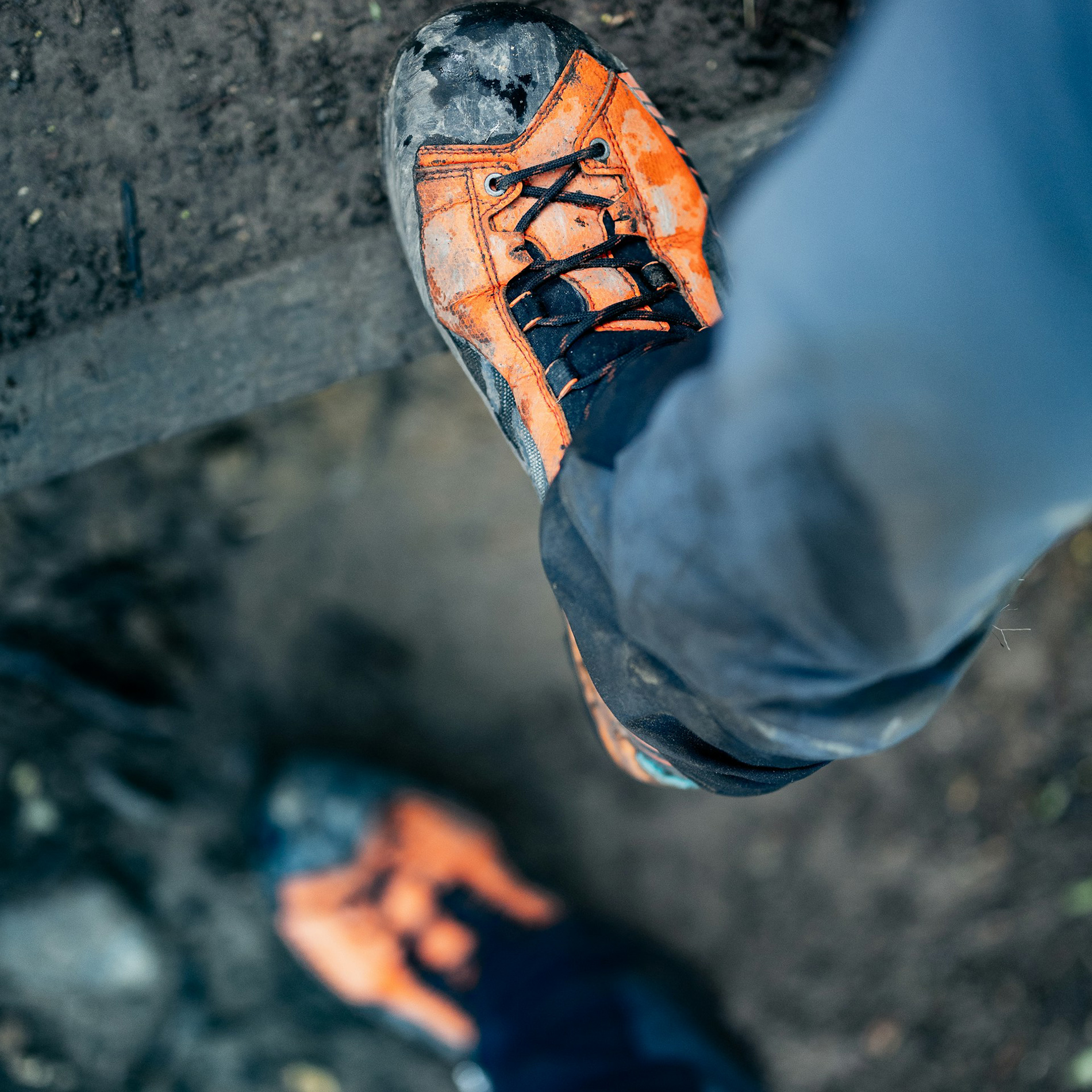
[00:05:25] So I signed up, I raised some money, I started training, and at 4am on the morning of August 22, I found myself on the starting line at the corner of 6th street and Harrison in downtown Leadville, readying myself to run 100 miles.
[00:05:43] The day before the race, I had gathered with the other 649 participants for an eight athletes briefing led by none other than the mother and father of Leadbill, Ken and Marilee, the race founders. And their address to US Athletes actually landed like more of an impassioned sermon than a real pep talk.
[00:06:06] Mayor Lee told us, what you're about to do is profoundly selfish.
[00:06:12] Think about the sacrifice that your training has demanded from your families, from your communities, from your colleagues out there. Tomorrow, it's going to be all about you. That's profoundly selfish, but it's also okay, because this experience is going to transform you. You're going to grow in ways that you can't imagine. And your job is to take whatever you learn here back to your communities. This is worth nothing unless it helps you shape this world into a better future.
[00:06:49] So I guess in some ways, this sermon is my attempt to make good on that charge that Marilee gave to us. But the most resounding message that I got from that athlete talk was delivered by Ken. Ken Kubler, this man in blue jeans and a cowboy hat. Former miner and race founder who said, out there tomorrow, you were all going to experience more pain than you could imagine or conceive of.
[00:07:21] Make friends with your pain, he told us, because if you make friends with your pain, you will never run alone.
[00:07:33] Well, make friends with my pain I did.
[00:07:37] The first 25 miles went pretty well. I felt strong, and miles 25 through 40 sort of tested me in ways I didn't anticipate. My hips started talking to me, kind of crying out in pain and agony, and my stomach shut down. The sun was rising higher in the sky, and this is a very flat 15 miles, of course, much of it on asphalt, and I just didn't know how to go far forward. It was tough to take in calories and fuel myself adequately. I had made nine Elvis sandwiches, peanut butter, banana, and bacon to consume at my different checkpoint locations. And I found myself unable to stomach more than one of those, instead just choking down one of these gel packets every 20 minutes just to keep calories in. And I found myself faced with that experience of profound pain.
[00:08:41] I was uncomfortable. I wanted to stop.
[00:08:45] And I asked myself what my options were. I could rest. I could slow down. I could let up or throttle back, or I could just keep going.
[00:08:56] Realizing that my pain was. Was there accompanying me, I made it to that last aid station at mile 40 before this historic climb, which is kind of the iconic part of the course at the base of Hope Pass. You gear up, get ready to go up 3,000ft and down 3,000ft to a town called Winfield, which is that 50 miles in the turnaround. I did okay on the climb, and coming down, I. All I felt was anxiety start to grow because I had no idea what awaited me at mile 51. 50 miles was the longest I had ever run, and past 50 miles was absolute uncertainty. Felt like stepping off a threshold into the abyss. But I came into Winfield, and this sort of like F1 pit crew of hippies ran up to me and started handing me pickle juice for my cramps and Coca Cola for fast carb energy and dousing me in cold water with sponges, loading my running vest with ice, and then turned me around, kind of slapped me on the rear and sent me on my way.
[00:10:14] And I looked up at that climb, another 3,000ft, and I thought to myself, wait, climbing, climbing. I know how to do.
[00:10:27] I train in the Tetons. I know how to climb.
[00:10:32] I took out my poles and started to trek up toward the crest of that pass. And when I got there, I texted my pacing crew saying, y' all. It's all downhill from here. I'm on my way to you. And. And then got a text from my coach that said, dude, am I seeing these splits correctly? You absolutely crushed that pass.
[00:10:57] And his text sent me into this kind of elated daze. I threw in my AirPods and listened to my favorite moment from my favorite band. Yes, of course, the tweezer from Fish's 1994 Chicago show.
[00:11:12] And Fish, I found myself openly weeping.
[00:11:17] Weeping these tears of awe and amazement and gratitude at what the body can do.
[00:11:27] These amazing bodies we have to move through the world and through these places of such profound beauty.
[00:11:37] And in that moment, I realized I wasn't just running with pain anymore.
[00:11:43] I was running with beauty as well.
[00:11:48] To be sure, the pain that I experienced in Leadville, Colorado, two weeks ago was a pain that was elected.
[00:11:57] It was a pain that I imposed upon myself. Type 2 fun, right?
[00:12:04] But there are often seasons in our lives, and we know this all too well, where it feels like the pain can be imposed on us from without.
[00:12:15] The pain is not pain we would have chosen.
[00:12:19] Why am I experiencing this strife and strain with my partner?
[00:12:25] Why is that particular kid needling me in ways I can't quite decipher or understand?
[00:12:35] Why, after doing such a good job for so many years, was I let go from that job?
[00:12:42] Why the diagnosis?
[00:12:46] Sometimes life forces pain upon us. And how do we access beauty then? How do we find ways to sustain ourselves and our connection with these deeper divine resources of inner energy and strength, of faith and trust that can sustain us?
[00:13:08] That question leads me to this very complex passage from Exodus, which Amanda read for us this morning.
[00:13:18] This is the Passover story. It's one of the high holy days, one of the most sacred moments in all of Jewish tradition and practice.
[00:13:29] And we've been following this story of the Hebrew people, these future Israelites, for the entire summer. Abraham and Abraham's offspring. We've been following this story where Abraham is called out of the land of his ancestors, where he makes this epic voyage across the Arabian desert, comes to a place where God will show him, and receives God's promise that your children, your descendants, will be more numerous than the grains of sand on the beaches of this world, and more numerous than the stars in the heavens. And we see that promise starting to bear fruit as the Israelites come of age in Egypt. But we see them in a circumstance and predicament that we may not have anticipated. When God made that promise to Abraham, the Israelites, these Hebrew people, are under a yoke of oppression.
[00:14:25] The Pharaoh and the other powers that be are threatened by the robustness and the resilience and the grit and the fortitude of these Hebrew people. And so he piles labor upon them. He sets them cruel taskmasters to impose these work quotas, these labor regimens every day.
[00:14:51] The Hebrew people, 365 days a year, seven days a week from sunup to sundown, are charged to make bricks for the Pharaoh's building projects.
[00:15:03] Every day from dawn to dusk. Bricks, bricks, bricks. They have a quota of bricks to build. And when they reach that quota, he increases the quota. When they reach that, quote, quota, he says, well, now I'll no longer supply you straw with which to make the bricks. You've got to gather that yourselves.
[00:15:23] And these Hebrew people are laboring day in and day out. They're in this position of imposed pain when a leader is raised up amongst them.
[00:15:35] Moses encounters the living God speaking in the burning bush, a God who tells him, go to Pharaoh and say, oh, let my people go.
[00:15:44] And we kind of know how the narrative unfolds from there, right? The Pharaoh will relent and say, okay, the people can go. And then he'll reneg on his promise.
[00:15:55] So God sends a series of 10 plagues. We have gnats, we have frogs, we have locusts, we have all of these afflictions that God sends upon the Egyptians to try to soften Pharaoh's hardened heart.
[00:16:12] Still, he remains impervious to persuasion until God sort of calls in his final option. In order to persuade Pharaoh's heart to relent, he does this thing, this thing that it's sort of difficult for us to reconcile with our idea of a loving God.
[00:16:36] God says through Moses, I will kill each of your firstborns, both human and animal.
[00:16:46] And when I hear that, I think. I often think of, okay, the firstborns dying. That's sort of horrific, like all that. Like a generation of newborns are getting wiped out. But firstborns, those are Egyptians of age, every age. Folks in their 80s, their 60s, their 40s, their 20s, including Pharaoh's firstborn son.
[00:17:08] In a split instant, all are cut down and piled up throughout Egypt.
[00:17:18] What are the Hebrews to make of this?
[00:17:21] God says to the Hebrews, you will be spared. Your firstborns will be spared. But the way that you get a free pass is to roast a goat and smear the blood over on the lintels of your doorpost.
[00:17:41] How do we wrap our hearts around the complexity of this moment?
[00:17:46] On the one hand, God is delivering the Hebrew people from their pain and bondage But. But God does so through an act of murder and violence.
[00:18:00] The Hebrew people are liberated and they pass through the Red Sea. But when they do so, what they see in the rear view mirror is a coliseum, a concert stadium full of Pharaoh's armies being engulfed in the waves.
[00:18:15] The Hebrew people will have 40 years to wander through the wilderness, to reconfigure and reorient themselves in relationship to God, and they arrive in the promised land. But when they do, there are people living there, and they are only able to enter that land by putting other people to the sword.
[00:18:36] So what are we to make of a God whose nature we know to be love and faithfulness, who seems to accomplish acts of deliverance and liberation and beauty through such unconscionable, inhumane ways?
[00:18:56] I don't know.
[00:19:00] I don't know.
[00:19:01] I don't think there's any theologian out there or any theologian who's ever lived who can make sense of this question in a satisfactory way, of why a God of love and goodness and beauty would allow such horrific pain to exist in the world and in some ways seem to be agent and author of that pain. For some, I don't think we can satisfactorily explain the why of God's ways or how God operates. And I don't know if it's really our business to concern ourselves with those questions of ultimate mystery.
[00:19:45] We can't explain to ourselves why God allows for pain to happen.
[00:19:51] But.
[00:19:53] But I do think we can find ways to live through those experiences of pain in a way that allow us to stay in connection and. And in relationship with that God, whom we might not understand completely.
[00:20:12] And I think that the way we do access those resources of strength, of trust, of hope, of connectedness in our seasons of pain is through beauty.
[00:20:25] Or at least that's one of the ways that I'm able to stay connected with God, even when I don't understand why God is doing what God seems to be doing.
[00:20:37] And I wonder if, as those Hebrews were passing through the Red Sea, even as those waves were engulfing this army of innocent people, if maybe they would have caught a little glimmer of beauty in the way that the sunlight or the moonlight hit the water as those waves were closing in, as the Egyptians gathered to bury their departed, could they still marvel at the way the early dawn light or the dusk caught the clouds and purpled up the horizon line?
[00:21:13] Could they still, after this experience of trauma and difficulty and heartache in the midst of their grief, still give birth to kids and Delight to see those babies learn to crawl and talk and laugh and ultimately to sing.
[00:21:33] Even as the Hebrews were smearing blood across the mantles of their doorposts, could they still savor the taste of that cabrito?
[00:21:46] The year before I went to seminary, I was volunteering at a soup kitchen at my home church in Houston in Texas. And every day there was a man named Mike Robarsky who would volunteer alongside me. Mike had gone to Yale and been a classics major, and I remember him sharing with me once an experience he had of his dad being completely confused and a little discouraged by his decision to be a classics major. He said, mike, like, what are you thinking, son? And you're just going to end up digging ditches your entire life.
[00:22:22] And Mike said, well, dad, that might be true. I could be a ditch digger. But as I'm there digging the ditch and I see the sun rise early each morning, I'm going to think to myself, rosy fingered dawn, which is a line from Homer's poetry, Beauty can sustain us in our pain.
[00:22:49] And if you find yourselves in one of those seasons of pain, of suffering, of incomprehensible heartache, where it doesn't seem, but where you can't seem to understand how a loving God with whom you're trying to be in relationship is allowing you to experience something so difficult, I would say to you, look out for beauty, access awe in any way you can.
[00:23:19] And I want to close by just sharing two ways that I've found myself better able to access awe and beauty in my own life, especially in seasons of pain. And these lessons come from my Leadville training.
[00:23:35] The two most important things that I learned training for this race, and I knew nothing I would like run in this digital Casio watch. I had this very grip it and rip it approach and had a lot to learn about race strategy. The most important thing every ultra runner needs to know is that fueling is critical.
[00:23:58] Your body can do way more than you think it can, but it has to have fuel. Fuel to operate. And calories are like the wood you put in a stove to keep it burning hot for longer than you might expect it could.
[00:24:17] And so when I was training and preparing to run this race, my coach, I remember, said to me, all right, Travis, you've put in the hard work.
[00:24:25] You've put all the resilience and strength into your muscles that you can.
[00:24:30] Now what you gotta do is just go out there and have fun and take care of yourself.
[00:24:39] Make sure you're getting the calories you need and the hydration you need take care of yourself out there.
[00:24:48] And if you find yourself in a place of pain or heaviness right now and you're hungry for that experience, experience of beauty to connect you with God, take care of yourself.
[00:25:02] Whether that's going out for hikes or runs, or lying on the grass and feeling the sunlight, these bright brisk days on your skin, or watching the wind do that mystic thing it does with the aspen trees.
[00:25:18] Nourish yourself in whatever way you need nourishment so that you can be rested enough to open your eyes to beauty.
[00:25:29] The second lesson I learned was the importance of pacing.
[00:25:34] I remember my coach telling me, look, no one can win an ultra in the first 50 miles, but you can absolutely lose it.
[00:25:45] So many people go out too fast, too quickly, and throttling back and maintaining discipline over your pace is crucial to actually finishing the race. And what I found myself doing in that exhilaration and adrenaline those early miles when I wondered if I was pushing pace too much, was to connect with my breath, to close my mouth, and to breathe through my nose as much as possible.
[00:26:12] If I can just breathe through my nose, I would tell myself I'm probably maintaining a slow enough pace.
[00:26:21] Breath, y', all, is this amazing gift and this spiritual technology we all have to reground.
[00:26:31] And when you find your mind going overly active with worry, with anxiety, with stress, connecting with your breath will bring you right back to the present moment.
[00:26:47] If you try closing your eyes and just drawing your attention to your breath, you'll find that you are centered and in the present moment in a way that doesn't allow you to be overly anxious about the past or the future, which don't exist anyway.
[00:27:04] And you might come alive to this miraculous fact that our bodies breathe on their own.
[00:27:12] We don't need to do anything to tell our lungs to breathe. They just know how to exhale and inhale. And then that carbon dioxide we breathe out gets taken in by all these living plants around us and converted back into oxygen that we re breathe in again.
[00:27:34] Breath reminds us that we are never alone and that we are connected to everything around us.
[00:27:46] So if you find yourselves carrying any pain this morning, I invite you to be sure to take care of yourself, to slow down, to stay connected with your breath.
[00:28:03] If you're experiencing that pain, make friends with it.
[00:28:08] Make friends with your pain.
[00:28:11] Make friends with beauty.
[00:28:13] And if you do so, you'll never feel alone.
[00:28:17] Because the truth is.
[00:28:20] And we know this by now, don't we?
[00:28:23] We know this, we never, ever, ever actually are alone.
[00:28:33] Amen.